How GreenIron can upgrade SSAB’s residual products with hydrogen technology
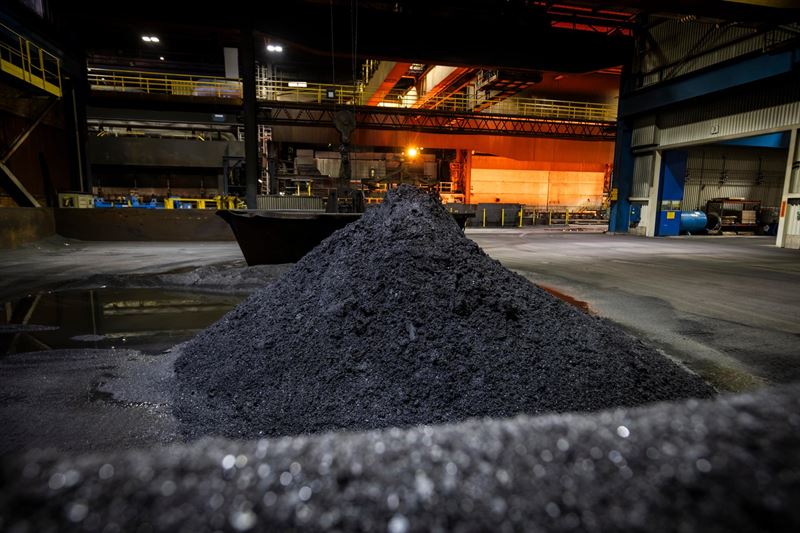
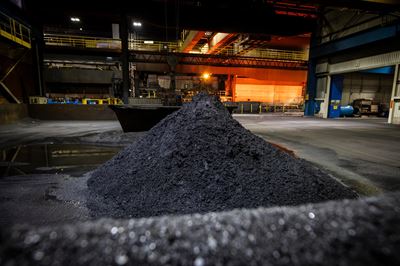
Mill scale, which is oxidized iron, is generated during hot rolling at SSAB in Borlänge. New ways to recycle the mill scale are now being tested with GreenIron. Photo: Henrik Hansson
In current steel production at Borlänge, mill scale is generated during hot rolling - oxidized flakes that come off the steel as it is rolled. SSAB currently recycles the scale in-house as briquettes that are fed back into the blast furnace. But the shift to electric arc furnace production is changing material flows, and mill scale is becoming harder to recirculate.
“The shift to an electric arc furnace has many advantages, but one drawback is that it will be harder to recycle the different types of mill scale in our own process. That is why we need to find ways outside our own processes to remove the oxide from them,” says Erik Grånäs, sales manager for byproducts in SSAB.
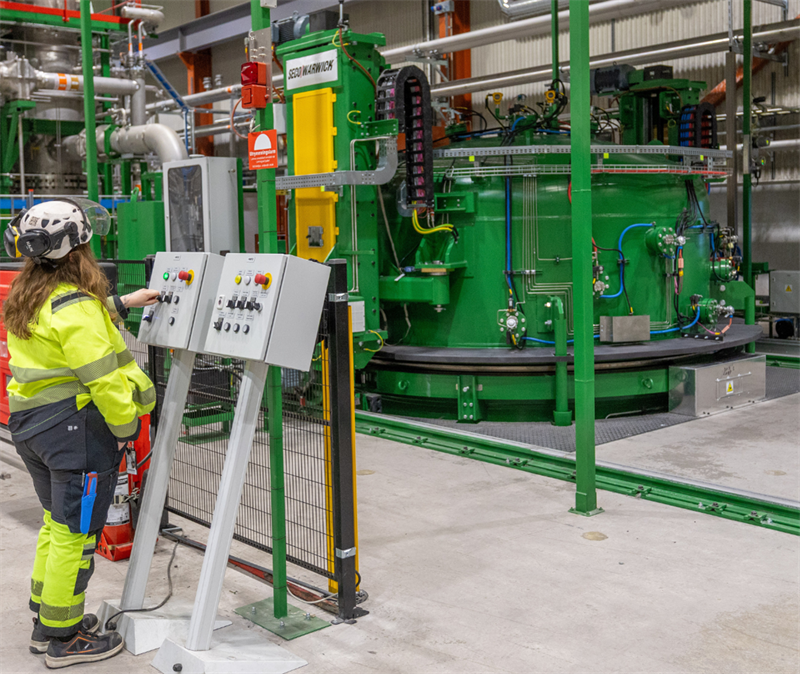
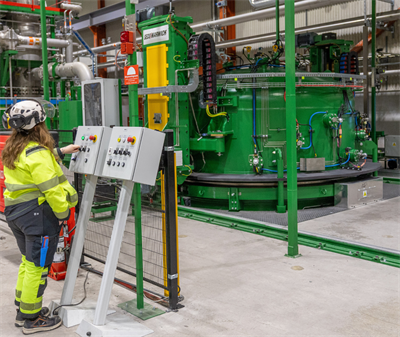
This is the furnace that the Swedish scale-up GreenIron uses to remove oxides from metals with hydrogen.
Purifying metal without fossil fuels
With this problem in mind, SSAB connected with GreenIron in 2024, a Swedish scale-up that uses hydrogen to remove oxides from metals. The introduction came through Dalarna Science Park’s “Circular Industry Accelerator” project, which matches industrial companies with startups that make use of residual streams in different ways.
“Our hydrogen-based technology allows us to recover valuable metals from residual materials that might otherwise be lost. We can reduce the material so the metal can be used in production again - with significantly lower carbon dioxide emissions,” says Katarina Bergegård, marketing and communications manager at GreenIron.
Over the course of 2024 and 2025, GreenIron made several visits to SSAB Borlänge and subsequently ran tests on SSAB material at its facility in Sandviken. Agglomeration has been a key part of the development work - shaping the mill scale into larger, stable units that can be handled and reduced efficiently in GreenIron’s process.
“The properties of mill scale can vary depending on where it comes from, so finding the right solution takes a good deal of testing. We have tested different binders and agglomeration recipes to produce a material that works well in our reduction process and still retains a high metal content,” says Katarina Bergegård.
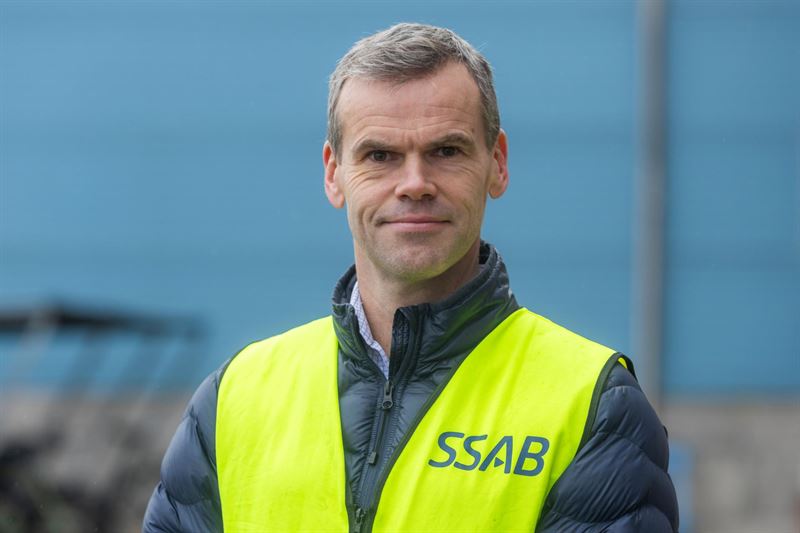
Erik Grånäs is sales manager for byproducts at SSAB. Photo: Henrik Hansson
A mutually beneficial partnership
Since the initial contact with SSAB Borlänge, discussions have continued with SSAB in Finland, where the byproducts business is managed. GreenIron needs to run further tests before the processes can be scaled up. The company’s long-term goal is to install its furnaces close to steel plants around Sweden, and perhaps globally, to cut down on metal transport.
Both parties speak highly of Dalarna Science Park’s role in connecting large industrial companies with smaller startups that work with residual streams.
“This partnership has been nothing but positive for us. We have learned from driven entrepreneurs and had the chance to find more options for our residual streams. If the results are good, this will also give us a concrete solution that we can take forward together with GreenIron,” says Erik Grånäs at SSAB.
For GreenIron, the collaboration has been valuable in enabling the development of their process.
“As we scale up our commercial production, working with a steelmaker as large as SSAB is extremely valuable. When you industrialize a completely new technology, you need strong partners to develop, test, and learn alongside. That is how we can take the technology forward, step by step,” says Katarina Bergegård.
About the “Circular Industry Accelerator” project
The Circular Industry Accelerator started in 2023 and focuses on finding new uses for industrial residual streams. Dalarna Science Park helps industrial companies to find potential partners among startups, scale-ups, and academic institutions. The project is funded by the European Regional Development Fund, Region Dalarna, and the participating industrial companies.
Category and tags