Close collaboration fine-tuned to perfection ensures icebreaker performance
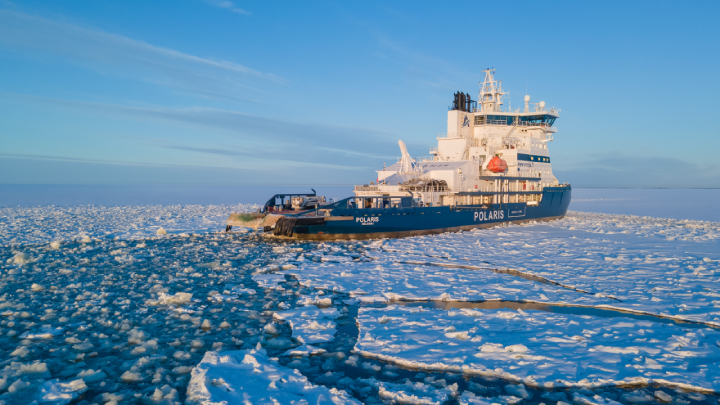
In such conditions, steel provides a crucial foundation – but strong material alone is not enough. It takes a carefully optimized combination of steel, design, and construction, along with close collaboration between the material supplier and the shipyard.
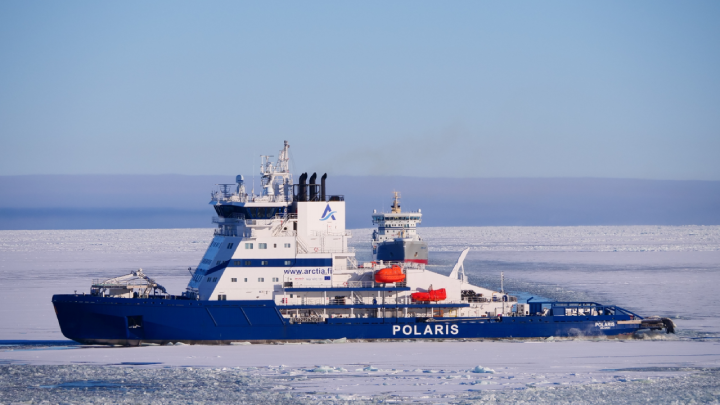
SSAB’s Raahe mill has experience in producing and supplying plate steel for shipbuilding. Finnish icebreakers such as Polaris, Kontio, Otso, Fennica, and Nordica have been built using steel produced in Raahe.
Finland has unique expertise in icebreaker construction: around 80% of the world’s icebreakers have been designed in Finland, and 60% built there. Most of the steel used in icebreakers built in Finland comes from SSAB’s Raahe mill.
Key challenges: cold and repeated loading
“Conventional steel can lose its toughness at low temperatures and become brittle. Therefore, steel used in icebreakers must retain its impact resistance even at extremely low temperatures. In addition, the steel must withstand continuous fatigue and mechanical stress,” says Tero Rasmus, Technical Development Manager at SSAB Europe.
Icebreaker design starts from the overall concept: the hull shape, structure, and intended purpose. “The goal is not only to withstand ice loads, but also to ensure efficient movement through ice. From the shipyard’s perspective, the properties of the steel are one important starting point,” adds Jussi Lehtinen, Sales Director at Helsinki Shipyard.
In addition to repeated loading the marine environment introduces corrosion. The icebreaker’s durability can be significantly reduced without proper material selection and protection.
Tested steels
Strength alone is not sufficient – the steel must also retain its toughness even at very low temperatures. In addition, it must be highly formable and weldable. These properties are influenced, among other factors, by the internal cleanliness (non-metallic inclusion content) of the steel. High internal cleanliness is one of SSAB’s unique advantages, ensuring consistent properties from plate to plate.
Shipbuilding steels, together with offshore steels, are among the most demanding products to develop and manufacture at SSAB’s Raahe mill. Steels with yield strengths of 420–690 MPa require exceptionally precise control of composition as well as the melting and rolling processes.
Success in developing high-strength shipbuilding steel depends on many factors. It requires a precisely controlled production process, as well as an understanding of shipyard requirements. It is about a holistic approach, where material development, manufacturing, testing, and end use are closely connected.
Shipbuilding steels used in icebreakers are approved by classification societies and must meet requirements for sufficient strength, good weldability, and impact toughness. For example, thermomechanically rolled NV E500TM steel must have a minimum yield strength of 500 MPa, and its impact toughness is tested and guaranteed at −40°C. In addition, the chemical composition of the steel is restricted—particularly carbon, phosphorus, and sulfur to ensure good weldability and resistance to cracking. Manufacturing, testing, and documentation must comply with classification rules, and products must have proper material certificates and traceability, explains Ossi Kangas, Product Manager for Plate and Strip Products at SSAB Europe.
Extreme conditions reflected in the structure
A key aspect of icebreaker design is understanding how ice affects the vessel, says Lehtinen from Helsinki Shipyard.
When a vessel moves through ice, the hull does not simply slide through it, but rather it crushes and submerges the ice. This generates localized impact forces as well as broader loads that vary with conditions.
Ice can form ridges or contain uneven structures that cause unexpected stress on different parts of the hull. Design must therefore account for both extreme individual loads and long-term cyclic stress.
Construction requires specialized expertise
“Design does not optimize just one factor. The hull form, structure, and materials must work together so that the vessel operates efficiently and safely. The bow, which is subject to the highest ice loads, is especially critical,” Lehtinen continues.
Simulation is increasingly used in design to predict loads more accurately. High-strength steels allow for improved durability and lighter structures, but they also impose requirements on manufacturing.
Working with such materials at the shipyard requires precise welding expertise and quality control. Especially in thick plates and critical structures, even small errors can have significant consequences.
Welded areas are also crucial, as they must withstand the same conditions as the base material so that the entire structure performs as a unified whole.
Collaboration determines the outcome
Both SSAB and Helsinki Shipyard emphasize the importance of collaboration. A material supplier is not just a provider of raw materials but is involved in developing solutions already in the design phase. The shipyard, in turn, brings practical insight into how materials perform in real structures and under actual construction and operating conditions.
At the shipyard, this balance includes aligning weight, buildability, costs, energy efficiency, and performance. The final solution is achieved through strong expertise and experience. Collaboration makes it possible to optimize material properties and structural design together.
For shipyards, this may mean new design solutions and even closer cooperation with material suppliers. A world-class icebreaker is the result of collaboration between material, design, and construction, and the ability to understand both steel and ice.
Attachments
Category and tags